
DIY Candy Magazine
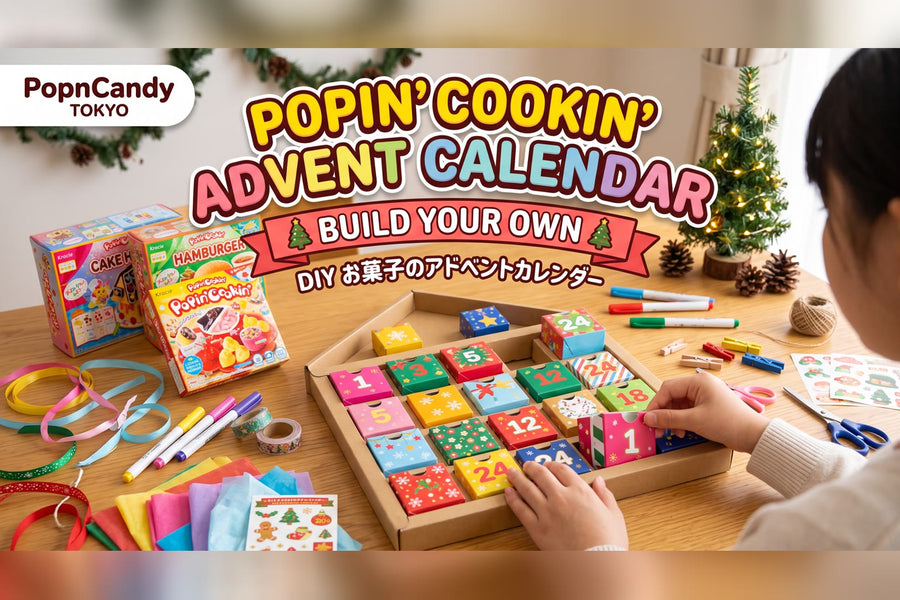
There is no official Popin' Cookin' advent calendar that we know of, so here is how to build one from individual DIY candy kits: 4, 12 or 24 days, and when to order.
Read more →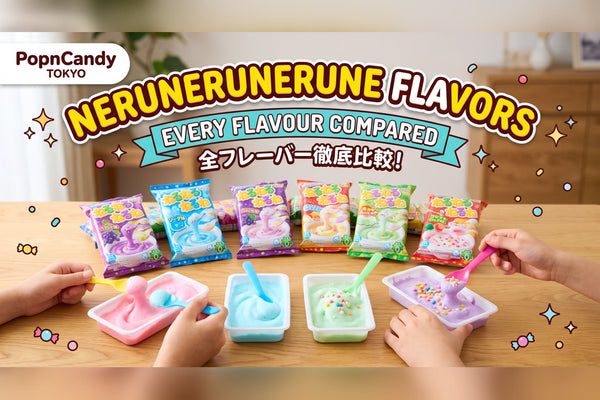
Grape, Soda, the revived 1986 Melon, Space Fruit, the DX Grape & Cola sharing box and the grown-up Shine Muscat: how the Nerunerunerune flavours differ.
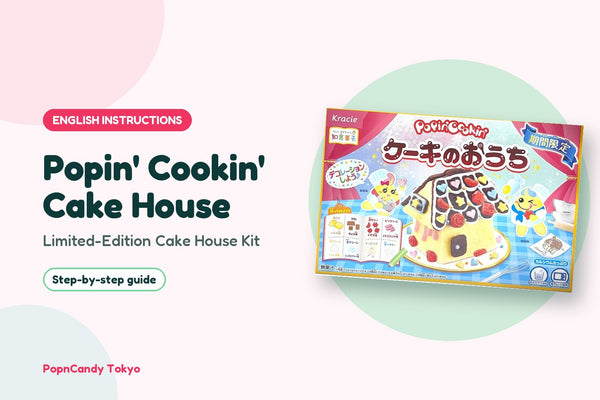
English instructions for Kracie's limited-edition Popin' Cookin' Cake House: a sponge house, a chocolate roof, cream, jelly and snow powder, in eight steps.
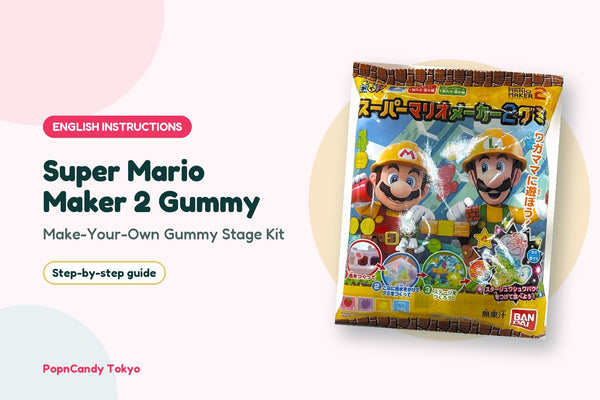
English instructions for Bandai's Super Mario Maker 2 Gummy kit: mix your own coloured water, set the gummies and build a stage. Water only, no microwave.
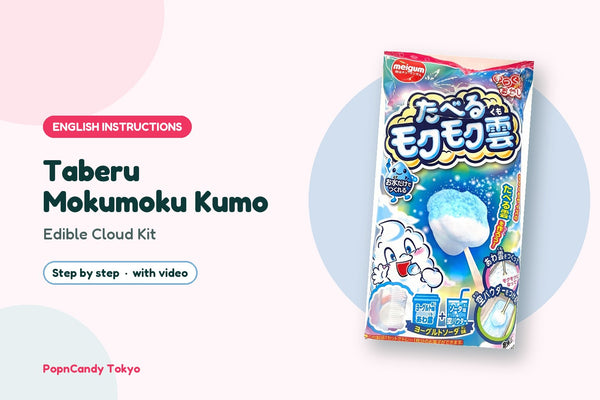
Meiji Chewing Gum's edible cloud: stir one powder into water until it foams up, then eat it a spoonful at a time, dipped in blue sky powder. The three steps, the words on the pack, and why the foam goes runny.
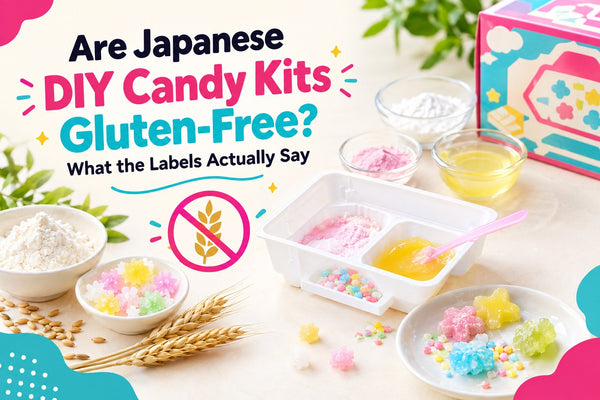
Four of the 36 kits we stock contain wheat. None are certified gluten-free. Here is what every label actually says, and what that means if you avoid gluten.
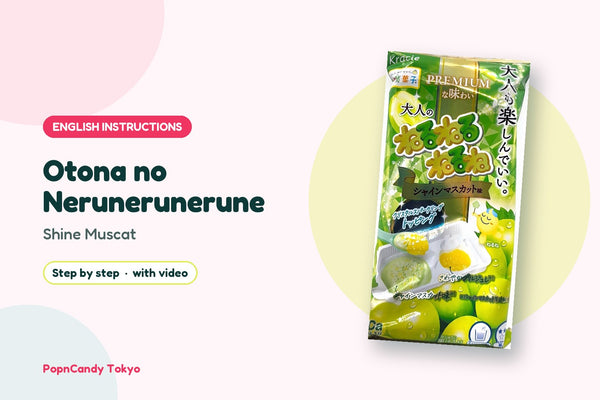
The grown-up Nerunerunerune, in Shine Muscat: the same colour-change reaction plus a puru jelly you set and break apart, and a crystal sparkling topping. The four steps in order, and what every word on the pack means.
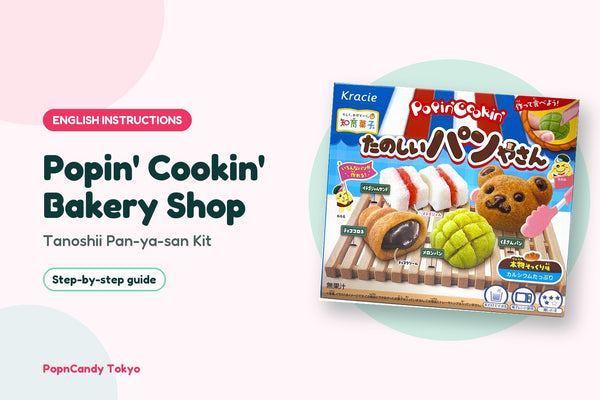
Kracie's bakery kit makes a white loaf, a melon pan, a bear bread and a choco cornet from powder, water and two rounds in the microwave. The six steps in order, what each Japanese label means, and where it goes wrong.
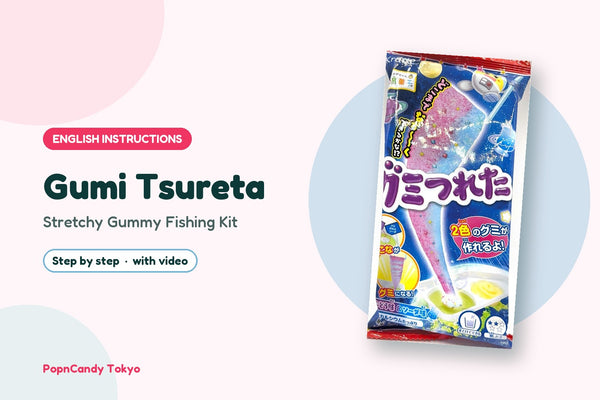
Gumi Tsureta — グミつれた, roughly “I caught a gummy!” — is the Kracie kit where you do not shape anything. You mix tw...