
Kawaii Japan Magazine
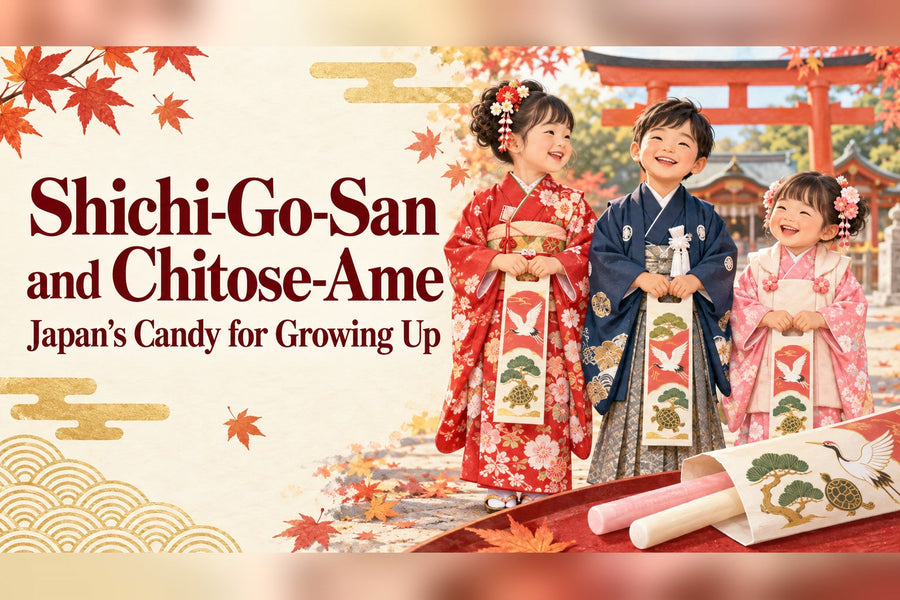
Each November Japanese children aged three, five and seven visit a shrine in formal kimono, and nearly all of them leave with a long red-and-white stick of chitose-ame. Where the day came from, what the thousand-year candy means, and how families celebrate now.
Read more →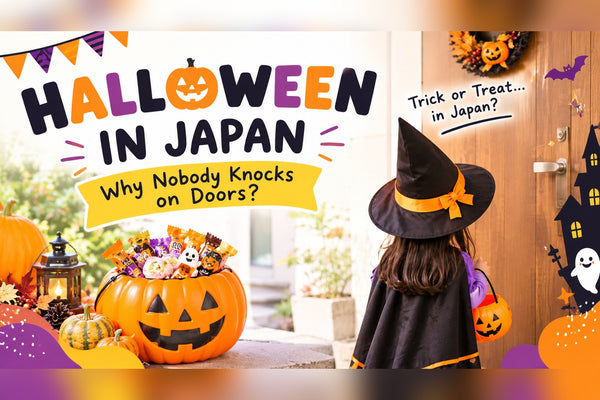
There is no trick-or-treating, schools ignore it and 31 October is a working day. How Halloween reached Japan through shops rather than communities, what the Shibuya rules actually say, and the two flavours that define the season.
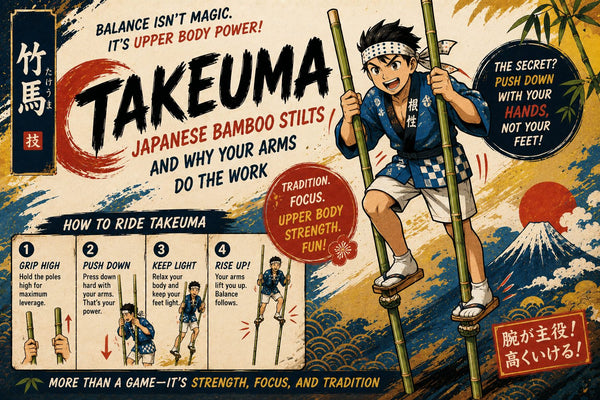
Takeuma are Japanese bamboo stilts. Beginners try to walk with their feet. The poles are actually carried by the hands, which is why the first step feels impossible.

Fukuwarai is the blindfolded face-assembly game played at Japanese New Year. Getting the face wrong is not a failure state. It is the entire objective.

Karuta is the Japanese card-grabbing game. At a high level it is decided in the first syllable or two of a poem, before the reader has finished the line.

Menko is the Japanese card-slamming game. You flip your opponent's card by moving air under it, not by hitting it. Here is how that works.

Taketombo is the Japanese bamboo copter: a twisted blade on a stick, spun between the palms. The twist is the entire toy. Here is how it works.

Otedama is the Japanese beanbag game: small cloth bags filled with beans, tossed in one hand to a counting song. Here is the pattern and why the sound matters.

Koma are Japanese spinning tops thrown with a wound string. The throw is not the hard part. The winding is.