
DIY Candy Magazine
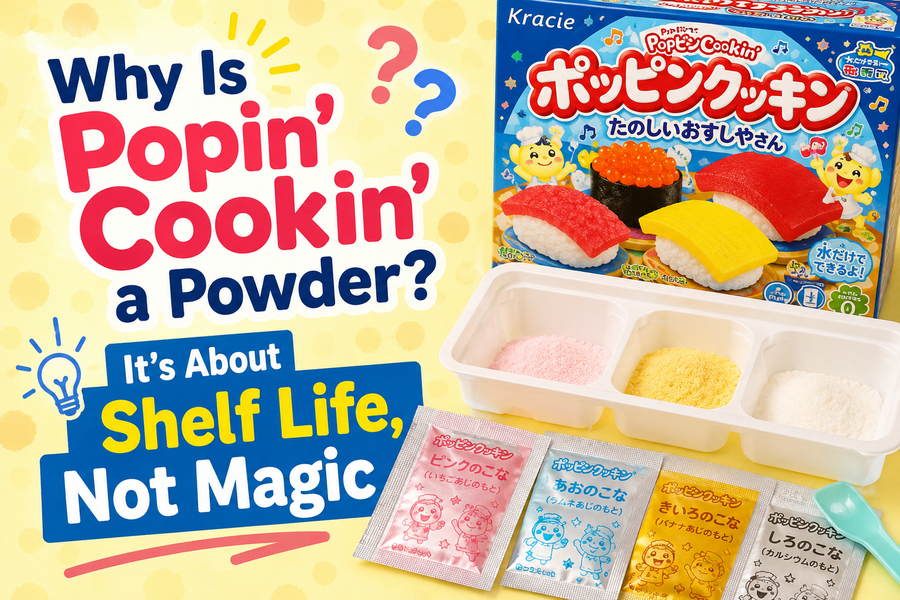
Japanese DIY candy kits come as sachets of powder, and it isn't a gimmick. The format exists first for shelf life, and everything else - the safety, the transformation, the shipping - follows from that one decision.
Read more →
People assume the hardest Japanese DIY candy kits are the fiddly, detailed ones — the tiny sushi, the miniature bu...

A Japanese DIY candy kit that "didn't work" is one of the most common messages we get - the colours came out dull,...

We turned over a Popin' Cookin' sushi kit from our own Tokyo shelf and read the Japanese nutrition panel. 113 kcal, 27g of carbohydrate in a 29g box — less sugar than a can of cola, and the one question the label refuses to answer.

Ramune, soda and cider are one flavour in Japan, not three. A Tokyo shop explains why Japanese grape candy tastes 'wrong', why the shelf here is replaced every month across 47 prefectures — and the one flavour we would never ship you.

Japanese candy kits are formulated for Tokyo's soft tap water. Here's the one step that genuinely cares about hardness, why New York and Seattle drinkers can relax, how to test your tap with a bottle of soap — and the 50ml rule that means you never need to buy bottled water for a whole kit.
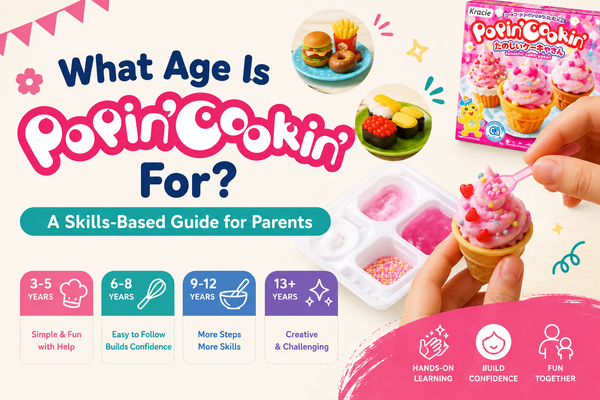
Kracie prints no recommended age on a Popin' Cookin' box - and that's deliberate. A Tokyo-based guide to judging DIY candy kits by the skills they demand, with a realistic age-by-age breakdown and which kit suits which stage.

Do Popin' Cookin' kits expire? A Tokyo-based guide to reading the Japanese best-before date, Japan's strict 'one-third rule' retail custom, storing kits so the powder never clumps, and telling when a kit has truly gone off.

Are Japanese DIY candy kits vegetarian? Mostly yes — but check first. A Tokyo-based guide to gelatin, cochineal and how to read the Japanese ingredient panel in 30 seconds.